
Insights
July 28, 2026
Evacuation Order Level 3: Go Now! 3 Questions You Should Ask About Your Homeowner’s Insurance Before This Happens to You
In Insurance

What’s in this article:
- How much insurance do I have on my home?
- Do I have building code and ordinance coverage?
- What is my flood insurance policy?
- Be prepared before the emergency happens
When Level 3 evacuation orders are issued, residents are mandated to go – now! Level 3 indicates urgent, extreme danger and immediate evacuation is required. Whether fire, flood, or other emergency, it’s a terrifying thing for homeowners to experience.
Over the span of just a few weeks in Washington, hundreds of residents faced the order to flee as their homes were threatened by wildfires:
- Citizens near the Wallula Junction in Walla Walla County experienced Level 3 evacuation orders on June 29, 2026 due to the Lambdin fire.
- In early July 2026, some Douglas County residents were evacuated as a result of the Chelan Hills fire.
- On June 16, 2026, people living just east of Spokane were ordered to evacuate due to a wildfire.
- In mid-June 2026, Level 3 evacuations were ordered near Hatch Grade in Southwest Washington as the Twin Sisters fire expanded.
Homeowners hopefully receive some warning before Level 3 in the case of emergency, but often have little control when it comes to facing disasters such as fires, floods, earthquakes, and major storms. The one thing you do have control over is advance planning and preparation, and one of the most important ways to prepare is making sure you are covered financially should these threats become realities.
Here are three key questions you should be asking now about your homeowner’s insurance. Read here or continue reading below.
1. How much insurance do I have on my home?
Ideally, your homeowner’s policy should provide enough coverage for you to rebuild your home should it be destroyed. Most policies have a coverage cap—using this limit, there is an easy formula to ascertain the funds you would have available for rebuilding: divide the coverage limit of your insurance by the total square footage of your home.
Formula: Funds for rebuilding = policy limit / home square footage

For example, if you have policy coverage up to $600,000 and a home with 3,000 square feet, your rebuilding expenses will be covered at about $200 per square foot of construction. That has to cover the architect and engineering fees, lumber, windows, roof, flooring, wiring and plumbing, labor, permits, and the contractor’s profit, in addition to other costs. HomeAdvisor estimates that the average cost of building a home in King County, Washington, ranges from $350 – $500 per square foot.
The good news is that this formula works the other way, too. Take the square footage of your home and multiply it by the building costs in your neighborhood to estimate the amount of insurance coverage you would need to be fully covered. This is a quick method for evaluating whether you are adequately covered in case rebuilding becomes necessary. (The Rebuild Cost Calculator here is one handy online resource for calculating your rebuilding costs that takes into account your location, your home construction type, and more.)
2. Do I have building code and ordinance coverage?
Your home may be a beautiful 1920s craftsman bungalow, a 1950s midcentury modern, or a 1990s suburban contemporary, but whatever year in which it was built, it is probably not up to current 2026 building codes. If you have to rebuild, your property insurance is based on reimbursing you to restore your property as it was, but that doesn’t necessarily include the upgrades you would likely need to ensure your property is legal under current codes.
Many homeowner’s policies do include some building code or ordinance coverage, but it is generally capped at around 10% of your coverage limit. In our example above with the $600,000 limit, that would allow for $60,000 in building code costs. That may seem like substantial coverage, but if your home requires electrical rewiring, better insulation, fire sprinklers, seismic reinforcement, or new fire-resistant building materials, your budget will go fast. The typical code compliance cost gap for a 1985 home after a major loss is over $92,000.
Furthermore, a homeowner’s policy will only cover the damaged portion of a home, even if the damage is enough to require that the home be completely demolished and rebuilt. For example, if a fire destroys 40% of your house but the home will have to be torn down and rebuilt, the policy still will not cover the 60% left undamaged, nor will it cover the cost of code upgrades to the undamaged portion of the home.
Fortunately, there is coverage specifically designed to address these issues: ordinance or law coverage. In addition to helping cover the cost of rebuilding or repairing to updated building codes—including the cost of bringing undamaged portions up to code—it also helps cover the cost of any teardown, demolition, and debris removal required to prepare the home for reconstruction. Ordinance coverage fills in other gaps in many homeowner’s policies, such as replacement or upgrades to the home foundation, including underground pipes.
The older your home, the greater the costs become to upgrade the home to current construction codes if rebuilding is triggered. Where you live is also a factor; areas prone to wildfires or with high earthquake activity may have more stringent building requirements or frequent code updates. It’s important to consult with an insurance professional to assess your need for ordinance or law coverage.
3. What is my flood insurance policy?
You don’t need to live near a coast or river to be concerned about the potential for flooding. Flooding can come from storms and extreme weather anywhere, or even just when a neighborhood experiences a broken water main or damaged sewer system.
- Northwest Oregon and Southwest Washington experienced flooding and landslides in March 2026 after record rainfall from an atmospheric river.
- The National Oceanic and Atmospheric Administration’s (NOAA’s) Climate Prediction Center forecasts a “super” El Nino in 2026, predicting an elevated flood risk in California and the Southwest and severe weather along the Gulf Coast.
- In June 2026, Tropical Storm Arthur brought flash flooding and tornadoes to the Southern United States from Texas to Georgia, where flood watches were issued.
- Statista reports that “floods are one of the most common weather-related disasters in the U.S.”
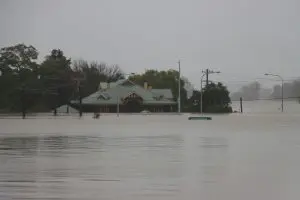
Many homeowner’s insurance policies cover water damage from an internal source such as a burst pipe, but do not cover flooding that originates outside your home. The Congressional Budget Office reports that damage from flooding in the U.S. cost an average $46 billion per year between 2014 and 2023. And, according to the National Flood Insurance Program (NFIP), 90 percent of natural disasters in the U.S. involve flooding. Floods can happen anywhere, whether you are in a “high-risk flood area” or not. Because primary homeowner’s insurance doesn’t cover water damage from external flooding, flood insurance is a necessity for homeowners who wish to make sure they are protected.
Be prepared before the emergency happens
Once the evacuation orders arrive or the storm is headed your way, it’s too late to protect yourself financially; you will not be able to add coverage after the fact. Now is the time to ask yourself whether your insurance coverage is adequate to your needs so that you can make any adjustments before your home and property are under threat.
Coldstream Risk Management clients know their insurance coverage addresses rebuilding costs, building code and ordinance expenses, and flood losses. We are well aware of the threats homeowners face, including risk statistics and real cost data when it comes to recovery. If you would like to speak with an insurance professional to assess any gaps in your insurance coverage, please reach out to us at riskmanagement@coldstream.com
This article is for informational and educational purposes only and does not constitute legal, tax, or financial advice. Readers should consult with qualified professionals regarding their specific circumstances.
Related Articles

August 4, 2026
Buying Life Insurance: How much term life is enough?


July 17, 2026
A New Kind of Healthcare Advocate: Why Some Families Choose Private Health Management


January 23, 2026