
Insights
June 4, 2026
Becoming Financially Independent: A Practical Checklist for Young Adults
In Family Needs, Financial Planning, Wealth Strategy

What’s in this article:
- Cash flow planning & budgeting
- Debt management
- Employee benefits
- Investments
- Tax planning
- Estate planning
- Insurance
- Family needs
Financial independence is one of the most important transitions in adult life. Whether you are graduating from college, starting your career, getting married, or beginning to build a family, the financial habits you establish early can have a lasting impact on your future.
Many young adults focus primarily on increasing income, but long-term financial success is usually driven less by income and more by consistent habits, thoughtful planning, and avoiding major financial mistakes. The following checklist highlights important areas young adults should focus on as they work to become financially independent.
Cash Flow Planning & Budgeting
A strong financial foundation starts with understanding your cash flow, which often starts with putting together a budget. A colleague of mine says that “proper budgeting is making sure there is no month left at the end of your money.” This is a good starting point for young adults. Having a budget does not necessarily mean eliminating all discretionary spending—it means knowing where your money is going and ensuring your spending reflects your priorities and long-term goals.
Building an emergency fund is also important. Unexpected expenses such as car repairs, medical bills, or temporary unemployment can quickly create financial stress if there are no liquid savings available. Many financial professionals recommend maintaining at least three months of living expenses in a savings account.
One of the greatest financial advantages younger investors possess is time, so young adults ought to get into the habit of investing early, as even relatively small contributions invested consistently over decades can grow substantially through compounding returns. A great starting point for many young adults is contributing to a company retirement plan (which is especially important if the employer matches contributions).
Debt Management
Debt management is another critical component of financial wellness. Credit card balances, student loans, and auto loans often carry very different interest rates and repayment terms. Reviewing borrowing costs periodically and comparing current market rates may create opportunities to refinance or reduce interest expenses.
Young adults should regularly review their credit reports and learn to freeze their credit. Credit scores can influence mortgage approvals, insurance premiums, apartment applications, and future borrowing costs. Identity theft and financial fraud have become increasingly common, making credit monitoring an important part of overall financial planning.
Employee Benefits
Employer-sponsored benefits are one of the most overlooked areas of personal finance, particularly among young professionals. This goes beyond contributing to workplace retirement plans, discussed above.
Health insurance decisions also deserve careful consideration. The cheapest monthly premium is not always the best option. Deductibles, provider networks, prescription coverage, and out-of-pocket maximums can significantly affect the true cost of healthcare once the young adult has to leave his or her parents’ plan.
In addition to medical coverage, many employers offer group disability insurance and life insurance. Disability insurance is particularly important because a temporary or permanent inability to work can have a major financial impact early in life when savings are still being accumulated.
Many companies also offer stock purchase plans, stock options, or restricted stock programs. While these benefits can create substantial wealth over time, employees should understand the vesting schedules, tax implications, and risks associated with holding too much wealth in a single company stock.
Investments
Young investors should focus on owning low-cost index funds of stocks and bonds as they build their wealth. This can run counter to buying the exciting news of the day or the hottest stock tip on social media, but young investors should focus on building a solid foundation. Systematic investing into a pool of U.S. public equities has historically delivered significantly above-inflation returns over long time periods. Understanding this sort of investment, including its costs and risks, is a great starting point.
Tax Planning
Taxes affect nearly every financial decision, yet many young adults receive little formal education about tax planning. (I did not have any formal tax planning until I took tax classes in law school—as a 38-year-old!) Retirement accounts such as traditional IRAs and Roth IRAs can provide valuable tax advantages for workers who are early in their careers and can take advantage of the long-term benefits of tax-free compounding.
Younger workers are also more likely to be able to take advantage of sections of the tax code that are phased out or eliminated for those taxpayers at higher income levels. There are numerous tax credits that young adults may qualify for to help with expenses related to raising children, electric vehicle purchases, and student loans, among others. Young homeowners ought to learn about income tax deductions too, as the deduction for mortgage interest is often meaningful.
Estate Planning
Estate planning is not only for older or wealthy individuals. Every adult should consider having basic legal documents in place and young adults ought to understand what is happening when they fill out that first beneficiary designation form for their workplace retirement account. If the young adult does not have sufficient assets to contemplate a will or trust, he or she still ought to have powers of attorney and healthcare directives to allow trusted individuals to make financial and medical decisions if they become incapacitated and unable to communicate. HIPAA authorizations permit designated individuals to access protected medical information during emergencies and can often give direction about organ donation.
Although these conversations can feel uncomfortable, advance planning often reduces confusion and stress during difficult situations.
Insurance
Insurance is designed to protect against risks that could otherwise create severe financial hardship. Young adults are often in the best position to qualify for lower premiums based on their longer life expectancy and better overall health compared to the population average.
Young adults should consider term life insurance as an affordable way to plan for an early death that leaves a surviving partner with high expenses. We commonly advise young adults to get enough term insurance to cover all college costs, pay off the mortgage, and replace two years’ salary of the deceased spouse. Young adults should avoid whole and variable life insurance policies in most situations, as these policies are often expensive and carry benefits that are unlikely to be used by young adults.
Finally, it is important that young adults start thinking about other types of insurance as well. This list includes auto insurance, property and casualty coverage, renters/homeowners policies, and umbrella coverage. I have seen umbrella coverage protect the savings of a young driver following an accident, and often recommend this sort of coverage to young adults who are renting out real estate and stepping into the world of being a landlord.
It is also important to notify insurance carriers about purchases such as e-bikes, jet skis, dirt bikes, snowmobiles, or other recreational vehicles, as these items may require additional coverage.
Family Needs
As young adults begin building families, financial planning becomes even more important. Parents should know who to contact in the event of emergencies involving family members. Families with children may also want to establish 529 college savings accounts to help fund future education expenses in a tax-efficient manner.
Final Thoughts
Financial independence is not achieved through a single decision or investment. It is built gradually through consistent habits, informed decision-making, and long-term planning.
Young adults do not need to become experts in every area of personal finance immediately. However, developing awareness around budgeting, investing, taxes, insurance, employee benefits, and estate planning can create a strong financial foundation that lasts for decades. The earlier these habits begin, the greater the potential long-term benefits become.
* Certified Financial Planner Board of Standards Inc. owns the certification marks CFP®. CERTIFIED FINANCIAL PLANNER™ and CFP® in the U.S., which it awards to individuals who successfully complete CFP Board’s initial and ongoing certification requirements.
This article is for informational and educational purposes only and does not constitute legal, tax, or financial advice. Readers should consult with qualified professionals regarding their specific circumstances.
Related Articles

June 22, 2026
Pre-Nuptial Agreements – A Women & Wealth Podcast


June 12, 2026
From Tip-Off to Legacy: Navigating a New Era of WNBA Wealth


June 10, 2026
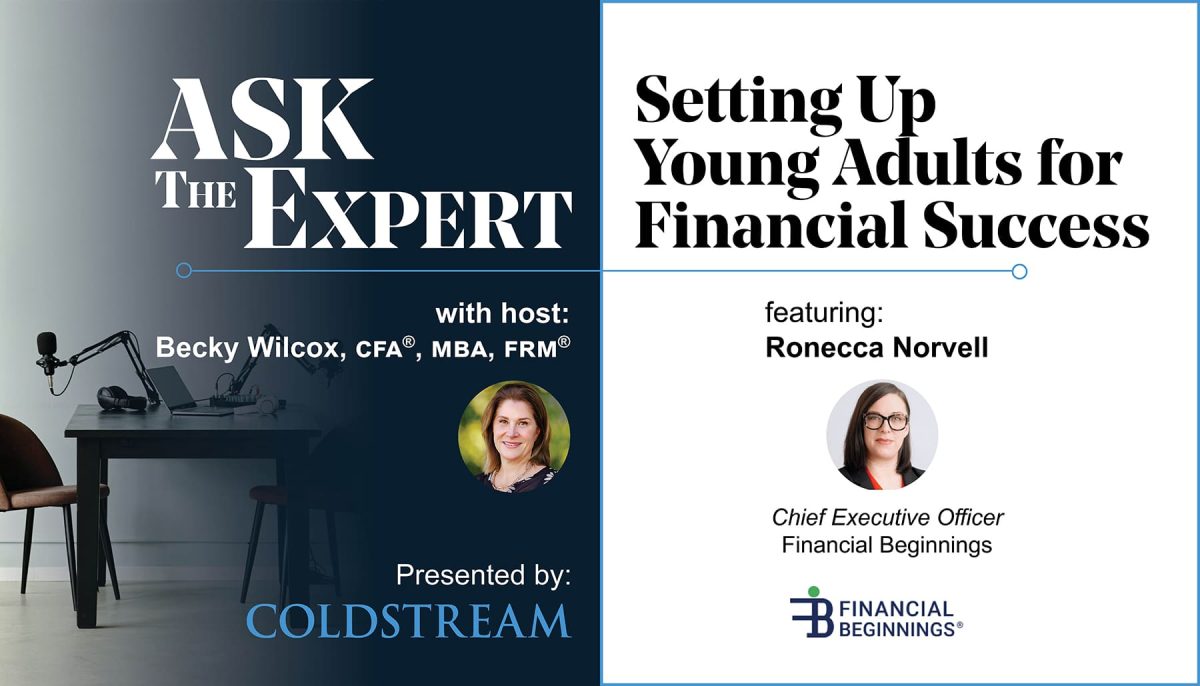
Setting Up Young Adults for Financial Success: An Ask the Expert Podcast