
Insights
November 30, 2021
Charitable Gift Fund FAQs
In Philanthropy, Wealth Strategy

A Donor Advised Fund (DAF) is a great way to manage donations to your favorite causes while optimizing your tax advantages. With a DAF, you can take a current tax deduction as you pre-fund your future gifts to charities. Also known as a “Charitable Gift Fund,” the account is managed by a public charity, but the donor can recommend how gifts should be distributed.
As with any charitable giving strategy, it’s important to understand how a DAF works and how to get the most out of it. Here are some answers to common questions from donors:
What is the benefit of gifting to a DAF instead of donating directly to a charity?
A DAF donation provides an immediate tax deduction, even though you may spread your gifts over several years and across several charities. If you expect your income will decline in future years, it might make strategic sense to take a larger deduction today while in a higher tax bracket. Or if you’d like more time to plan your family’s charitable legacy, it allows you to receive the current tax benefit while you decide on the causes or organizations you would like to support in the future.
What kind of assets can I donate to a DAF?
You can contribute cash, stocks, mutual funds, and other financial assets. In some instances, DAFs also accept complex assets such as real estate, private equity, and privately held business interests.
What is the benefit of contributing appreciated investments vs. just cash?
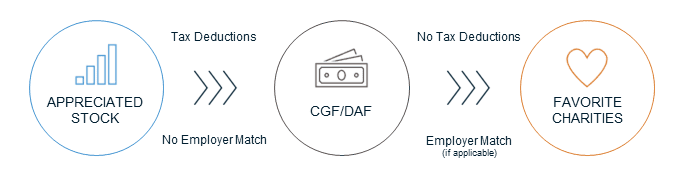
When you contribute stock or mutual funds that have increased in value to a DAF, you can take a charitable deduction for the full value of the donated asset on your tax return and avoid paying tax on the gains (if held over one year since purchase).
When do I receive the tax benefits?
The donor receives an income tax deduction for the fair market value of long-term appreciated assets transferred to the DAF in the tax year the contribution is made. No additional tax benefits occur when grants are distributed from the charitable account or when assets in the charitable account appreciate.
What happens to funds once they are donated to a DAF?
Most Charitable Gift Funds allow the donated assets to be invested so those assets can grow over time until the donor ultimately recommends grants to charitable organizations. Many DAFs allow you to select an asset allocation ranging from an aggressive growth allocation to a conservative allocation based on your preference and gifting time horizon.
What can account funds be used for?
Grants from your DAF can be made to almost any IRS qualified 501(c)(3) charitable organizations based in the United States. If you would like to support international charities, many national DAFs, like Schwab or Fidelity, partner with intermediary charities that specialize in various regions around the world.
What can’t account funds be used for?
Funds can’t be used to purchase anything of value or personal benefit, even items purchased for more than fair value, such as charity auction items. Meals, event tickets, parking privileges, or other perks that come in exchange for donations are not allowed.
Can I use the account to sponsor myself in a charity race?
No. The race entry is considered an item of value.
Can I use account funds to satisfy a pledge?
You can use your donor-advised fund to support a non-legally binding pledge. However, you can’t use your DAF to fulfill a legally binding pledge.
Can my employer match my gifts?
Many do. Your employer is the best resource to reference when determining what their policy is on matching grants from your charitable giving account.
Is there a limit to the amount of funds I can donate?
No. There is no cap on contributions.
Can anyone else make donations to my account?
Yes. Anyone can make donations to your account. You may also make donations to other accounts. In each case, the donor of the assets would receive a tax deduction, not the account holder.
Does a DAF charge fees to account owners?
Yes, the accounts carry annual fees, though they are significantly lower than fees for a private charitable foundation. DAF fees can range from as little as $100 per year to a percentage of the assets in the fund.
Does a DAF require minimum distributions?
Typically, yes, though the amount varies. For example, one large plan sponsor requires a distribution of at least $50 every two years.
Can I donate assets from my IRA to my DAF?
You may not use your IRA to fund your DAF while you are living. However, you may name your DAF as your IRA beneficiary, which would allow your IRA assets to be transferred to your DAF after your death.
What happens to my DAF if I die?
You may name a successor to continue making grants on behalf of your DAF. Some people name their children or other family members as successors. You can also choose a charity to distribute the remaining funds to upon your death.
Supporting worthy causes is important and aligns with many people’s long-term goals. In addition, it can provide valuable tax benefits. If you’re considering using a Donor Advised Fund to manage your charitable donations, please reach out to your dedicated Coldstream team – we are happy to discuss the benefits with you and guide you through the process.
Insights Tags
Related Articles

July 24, 2026
The Professional Athlete Blueprint: Taking Ownership of Your Enterprise


June 22, 2026
Pre-Nuptial Agreements – A Women & Wealth Podcast


June 12, 2026
From Tip-Off to Legacy: Navigating a New Era of WNBA Wealth